
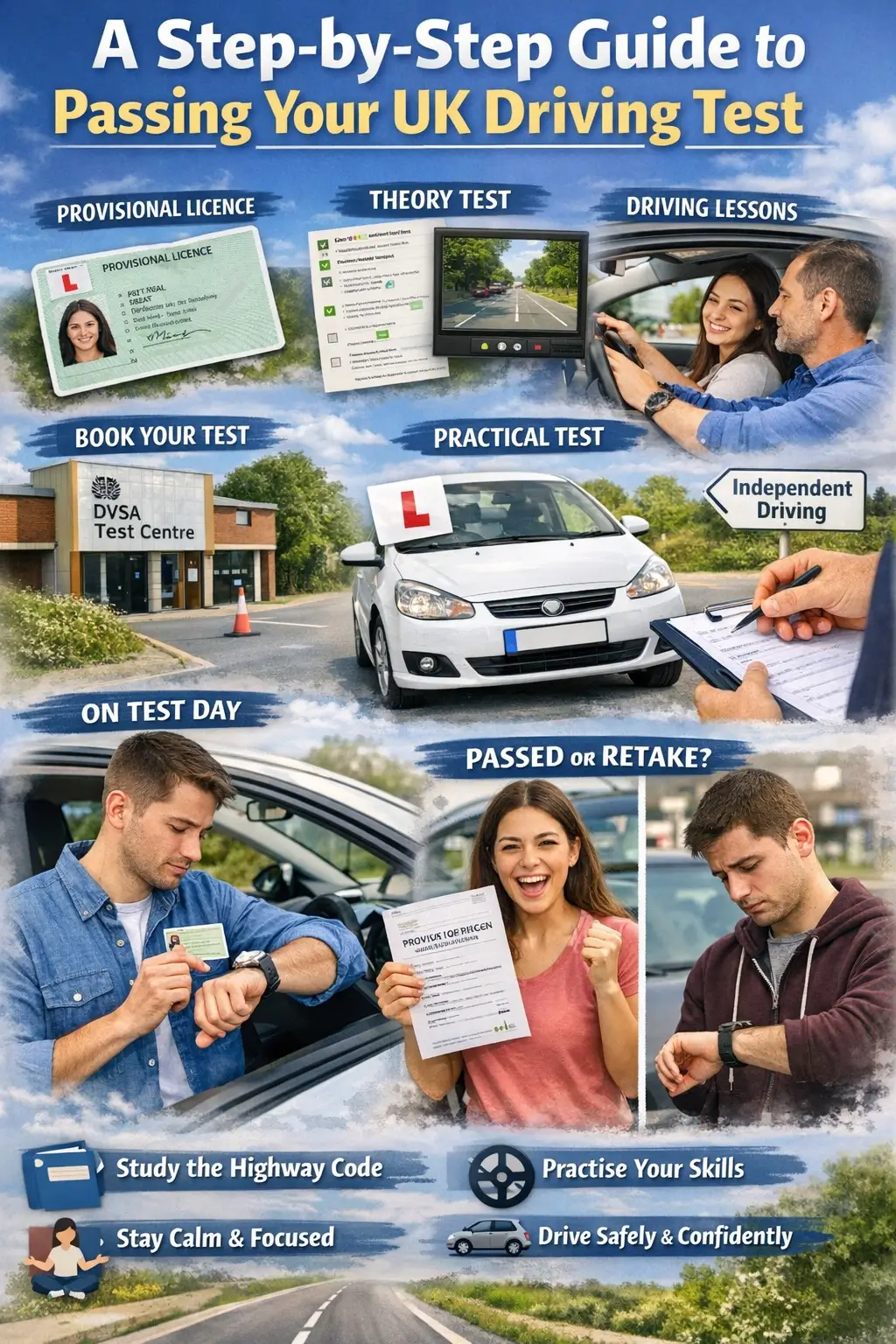
Passing your driving test is a major milestone. For many learners, it represents independence, opportunity and a real sense of achievement. Yet the process can feel daunting if you are unsure what to expect. This guide breaks the journey down into clear, manageable stages, from your provisional licence to test day, so you can approach it with confidence and preparation.
Before you begin lessons, you must apply for a provisional driving licence through the DVLA. You can apply online if you are at least 15 years and 9 months old, although you cannot start driving a car until you are 17.
Once you receive your provisional licence, you are legally allowed to drive with:
You must display L-plates at all times when driving as a learner.
Before booking your practical driving test, you must pass the theory test. This consists of two parts:
The theory test assesses your knowledge of the Highway Code, road signs, rules of the road and safe driving practices. Hazard perception tests your ability to identify developing hazards early, a skill crucial for safe driving.
Preparation tips:
A strong theory foundation will make your practical lessons far more effective.
There is no legal minimum number of lessons required before taking your test. However, the DVSA reports that most learners require around 45 hours of professional instruction, alongside additional private practice.
During lessons, you will develop skills including:
Progression should be structured. A good instructor will gradually build your competence and confidence, ensuring you can drive safely in a variety of traffic and weather conditions.
Once your instructor believes you are test-ready, meaning you can consistently drive safely and independently, you can book your practical test through the official GOV.UK website.
The practical test lasts around 40 minutes and includes:
You are allowed:
A single serious or dangerous fault results in a fail.
Examiners are not looking for perfection. They are assessing whether you can drive safely, legally and independently.
Key assessment areas include:
Many faults occur due to lack of observation, particularly at junctions and when changing direction. Consistent mirror use and clear planning ahead are essential.
In the final weeks before your test:
On the day itself:
Remember, the examiner wants you to pass. They are assessing safety, not trying to catch you out.
If you pass, you can begin driving independently straight away. Your examiner will arrange for your full licence to be issued.
If you do not pass, do not be discouraged. Many competent drivers require more than one attempt. Review your feedback carefully, focus on the areas needing improvement and book a retest once ready.
Passing your driving test is about consistent safe driving rather than last-minute cramming. The key elements are structured learning, strong theoretical knowledge, regular practice and calm preparation.
Approach each stage methodically, build your confidence gradually and focus on developing real driving competence, not simply passing the test. When you do pass, you will not only hold a licence but also the skills to drive safely for life.

We are Here

Quick Contact

Off.Hours